Last week, I said that great project planning starts by collectively setting outcomes as a project team. But how exactly do you do that? And what else should you include in a project kick-off?
How to set outcomes together
Collectively deciding what you want to achieve from a project means that everyone involved has ownership of those goals. It gives you a north star you can refer back to throughout the project, which is very clarifying when tensions crop up. And people like being asked! Giving everyone a chance to share their personal goals for a project means they are more bought in to what you decide on together.
Setting outcomes collectively can be simple. It’s helpful to give people a chance to input individually so you aren’t led too much by the chattiest people in a discussion. This is easiest to do on on online whiteboard or with physical post-its, but you could adapt to do this in a shared document or in the meeting chat if necessary.
Give a little context to the project and then ask everyone to individually add what they are hoping to achieve together. Set a timer for about 5 minutes for this, allowing everyone to work in silence. When the timer is up, ask the group to theme similar answers together. Some clear themes should emerge!
Often, project managers avoid doing this because they are afraid that the goals the group decides on won’t match their desired outcomes for the project. But I have never seen this happen. The group might nuance what the project manager would have said (usually in helpful ways!), but it’s very unlikely to contradict it. And frankly, if your group does have very different goals, this is true whether or not you take the time to find this out. It’s always better to know – and given the thinking space, people will usually hone in on similar goals.
What else should a project kick-off include?
I’ve written about some things it probably shouldn’t include: complex RACIs or detailed long-term plans. But a project kick-off is an excellent chance to set the tone for the rest of your project and answer some big picture questions.
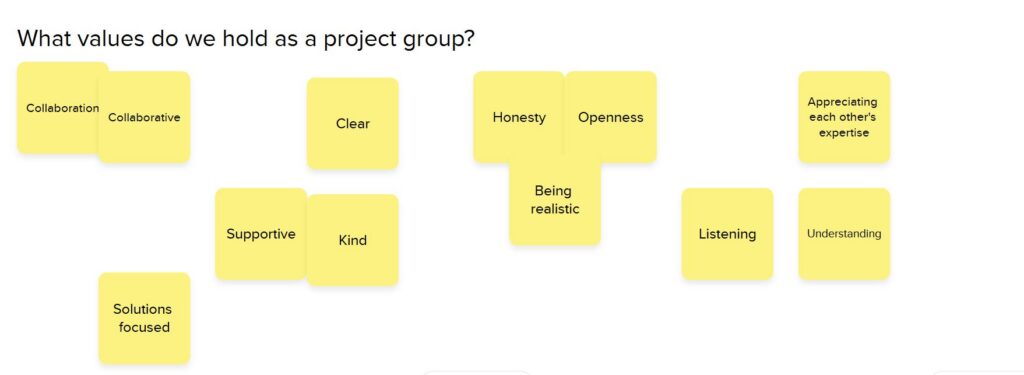
It’s helpful to start by thinking about the relational aspects: do the project team already know each other? Do they have established ways of working together? If not, I recommend dedicating time to a get-to-know you style icebreaker. You might also find it helpful to run something like a team charter, identifying the values and behaviours you want to live out as a group.
What’s different about an agile project kick-off?
There’s no one agreed formula for kick-offs in agile. But kick-offs are a key moment to start embedding some mindsets, especially things like empowered teams. By deciding on your outcomes and maybe a team charter together, you are already modelling that you aren’t going to work in a top-down way.
In an agile approach, it’s important to start by getting clear about your outcomes. This means the difference you want your work to make, rather than the tasks you’re going to do to get there. For example, a mailing or an email series are both examples of outputs. Inspiring people to take action is an outcome. Spending time on this in your kick-off helps make sure those outcomes are at the centre of your project.
Finally, your project group might explicitly decide to use some agile tools like stand-ups or retrospectives. Your kick-off is a great moment to agree how to approach things like keeping each other updated. Remember, you don’t have to use a particular tool to approach things in an agile way. The mindsets (like empowerment and outcomes focus) are more important.
Sample agenda for a winning agile project kick-off
Let’s pull this all together. This is how I would spend the time in an hour-long kick-off meeting:
- Check in (10 minutes). Ask everyone to answer a getting-to-know-you question (eg ‘please share your name, role, and a highlight from your week’).
- Context (5 minutes). Introduce the project and any context people should be aware of. Keep this short – you want the bulk of the meeting to be interactive.
- Outcomes (15 minutes). With that context, what outcomes do you each of you want from the project? Give people a few minutes to note ideas individually before theming and discussing.
- Team charter (20 minutes). Give people three minutes to note down values you want to share, theme and summarise, then do the same thing for how that translates to behaviours.
- Check out (10 minutes). Summarise your conversation and explain next steps, including the pattern of any future project group meetings.
Are there other activities you find helpful in a project kick-off?
Leave a Reply