Strategy and agile can seem at odds. Agile is all about working in short loops, learning and adapting as you go. That seems like the opposite of the long-term approach needed for strategy.
But many common problems with strategies could be addressed if they were approached in a more agile way. How often have you seen a 5-year strategy that’s no long relevant after 18 months? Or worse, you don’t know if it’s relevant because no one refers to it or remembers what it says?
A good strategy should be a live document. It should paint a picture of what you’re trying to achieve whilst still giving you space to adapt as you learn things along the way.
Agile mindsets for strategy
Agile mindsets changes how you approach strategy. Most importantly, they encourage you to learn and adapt as you go. The lesson here is similar to one we discussed about project plans: recognise you can’t predict the future. For planning, this means thinking big picture in the long run and only getting down to details in the short term.
For strategy, it means starting by thinking about the big picture outcomes you want to achieve, then identifying some strategic bets that might help you get there. Break these down so you are trying something small, building in reflection points so you can learn and adapt as you go. Be much more detailed about what you will do in the short term, and keep long-term plans at a high level.
In short, get clear about why and what you want to achieve, but work out how you’re going to get there as you go.
You should still be making clear choices in your strategy. This toolkit from the Charity Change Collective explains it well: strategic decisions are considered choices made after having considered your options. If there’s no possibility of failure, it’s not a strategic decision – that’s just business as usual.
This probably means that not everybody will agree with your strategy off the bat. But the other agile mindset that’s helpful here is about sharing power.
Strategy shouldn’t be developed by a small group of senior leaders in isolation. Firstly, they will miss things. Hearing from diverse voices exposes you to more ideas and strengthens your thinking. And secondly, it’s much easier to get people on board with decisions that they had a hand in making, even if it’s not exactly what they would have chosen on their own. Collaborative decision making gives ownership to everyone involved, so think carefully about who you need to own your strategy and how you can get their input.
Tools for shaping strategy collectively
How do you do this in practice? I would always start by gathering insights. Again, you want to hear from diverse voices and a range of sources here. Make sure you are learning about your audience, your products and the market from different perspectives. Done well, some of this should surprise you. If you are only looking at insights that confirm what you already think, you’re probably not looking hard enough!
I’ve got two tools I like to use with groups who are exploring strategy once they have spent time reflecting on insights. The first is affinity mapping. That’s a fancy name for just theming. Start by asking people to individually add possible answers to a question like ‘What options could we consider?’, ‘What principles should guide our choices?’, ‘How should these insights change our approach?’. Use physical post-its or an online whiteboard for this, getting people to add one idea per post-it and setting a time limit of five minutes or so.
Once the time is up, ask them to cluster similar post-its together. Then go cluster by cluster, suggesting how you could summarise those ideas and asking the group to improve your wording. This gives you a set of clearly articulated thoughts that draw on the wisdom of the whole group.
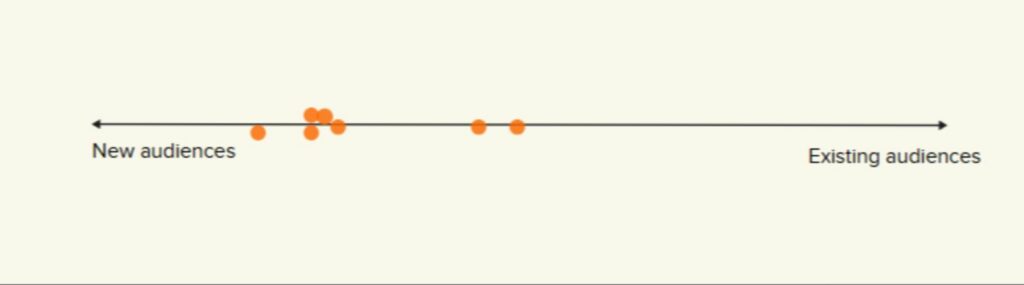
The other tool I like to use is even-over statements. These help you make those concrete choices I discussed earlier. For this, give people pairs of conflicting choices. For example, would they choose long-term growth or short term income? Would they prioritise new audiences or existing ones? Get everyone to place a dot on a scale from one extreme to the other and use their votes to inform where you land on each decision. ‘We prioritise x even over y’ forces you to articulate what you are focusing on, rather than letting different people assume different things.
What have you seen work well in developing strategy? Do you have any tools you like to use?
Leave a Reply