When your work has a clear focus, you achieve much more. You’re less distracted, more intentional, more centred on the right things. And it feels better. If you have one clear goal for the present moment, you’re much more likely to achieve flow.
I’ve written a lot about how backlog refinement can give teams that level of focus. But we can increase our focus on an individual level too. Here are three of my favourite practices for doing that.
Set intentions for meetings
Being focused is about having clear intentions. And one place where having a deliberate intention really helps is in meetings.
I don’t mean just having a meeting agenda (hopefully you don’t need me to tell you to do that!). But often what we really want out of meetings is a bit subtle. Maybe you want a meeting to make a decision, but your real goal is to make sure a particular complexity is considered, or that everybody feels heard, or that the two people with likely disagreements are able to hear each other’s point of view. Knowing that going in makes it much easier to make it happen.
Take a moment before your next meeting and work out what you really want out of it. You’ll find it’s much easier to stay on track if you’ve actually thought about this.
The rule of three
Another place intentionality can help is in having clear goals for your day. I’ve taken the idea of the rule of three from Chris Bailey. At the start of each workday I choose three things I want to achieve that day. Not four or five, only three.
Choosing that morning is flexible enough to allow me to respond to new things that come up, whilst still giving me enough structure to have a clear focus through the day. It means I focus on the most important things, rather than just reacting to what pops up in my inbox.
And limiting it to three things makes it achievable. If I tried to complete my whole to do list, I might never finish. But three things allows me to log off at the end of the day with a clear mind. I finish each day happy with what I have accomplished.
Time blocking
This idea is from Cal Newport. At the start of each day, I write a schedule for myself, split into half hour blocks. First I add in any meetings and my lunchbreak. Then I add in when I’m going to work on my three things, preferably in the morning as that’s when I work best. Finally, I add my remaining tasks next to the time I have available.
Deciding up front when I’m going to work on each task allows me to focus better. I’m much more likely to get my top priorities done if I’ve carved out specific slots for them and thought about how much time and energy they actually need. I also spend less time thinking about what I’m going to do (and less time procrastinating) if I’ve decided up front. And it allows me to batch little tasks and email without letting them take over my day.
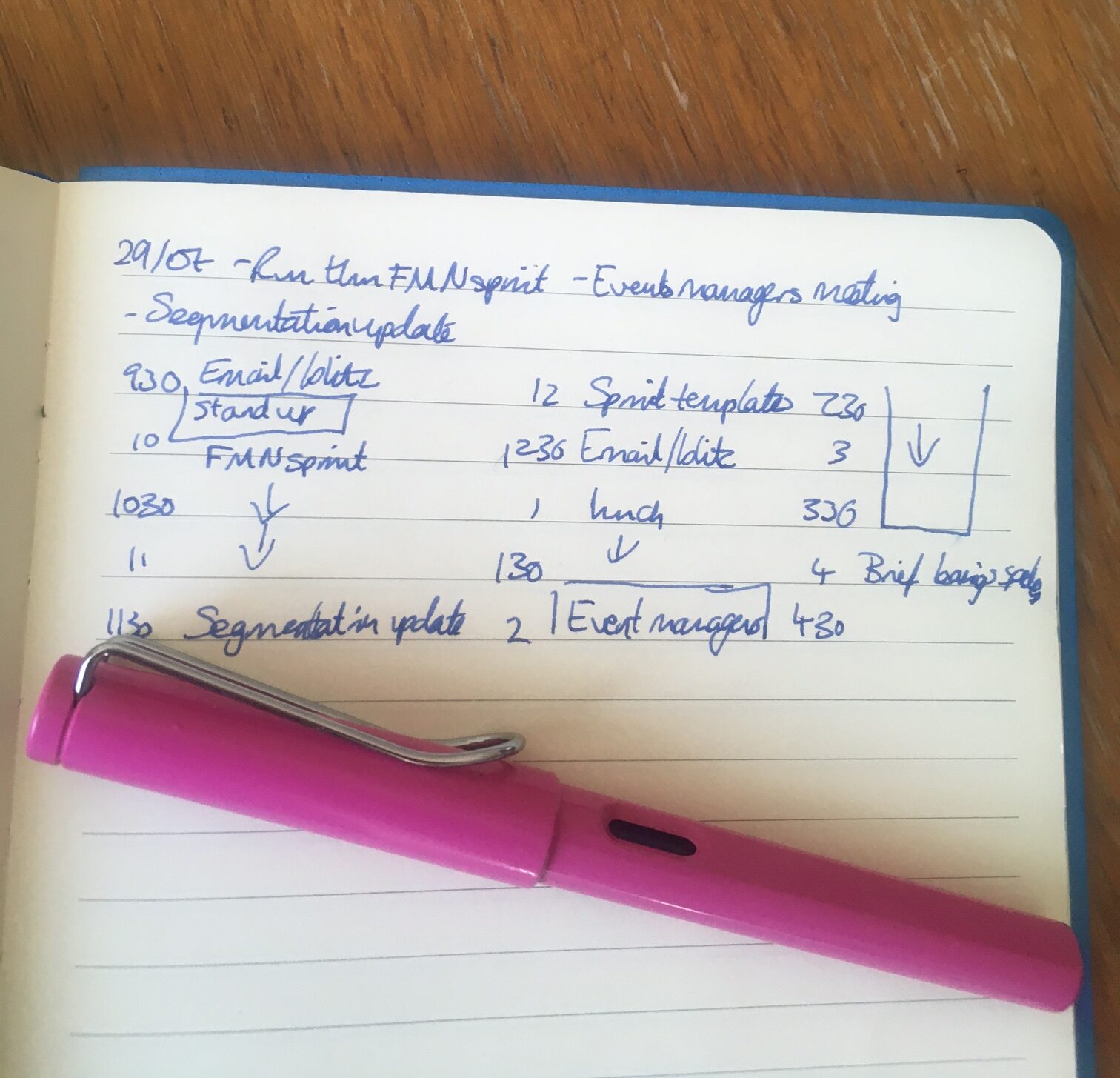
The whole day flows better when I plan it this way. Of course, sometimes something urgent crops up and I change my plans. But it’s much easier to change plans that consciously exist rather than just realise you’ve got to do something extra and hope you have enough time for it all.
What helps you focus in the middle of a busy workday?
This is a series on practices to help you think better. Next week: harnessing the power of mulling.
Sign up to my newsletter so you don’t miss a post.
Leave a Reply