So many brainstorms are painfully bad. Someone asks for options, and… crickets. Or you get the same few not-quite-right ideas that are either ridiculous or the very bland suggestions that come up every time. Or, more subtly, you quickly hone in on one idea without stopping to explore if there are better alternatives.
Idea generation doesn’t have to be like that. Like any facilitation, it’s a skill you can learn. Here are my five fundamental lessons to make your idea generation better.
Lesson one: warm up first before generating ideas
As we said last week, how you start your session really matters. This is particularly important when you’re generating ideas. Very few people can go from zero to ideas without warming up first. So, start your idea generation with a few minutes helping people get present and comfortable with each other.
The best creative icebreakers are a bit silly. If you can get your participants to laugh, they’ll be much less disinhibited in coming up with and sharing ideas later. My favourite icebreaker for ideation sessions is the 30 circles challenge. For this, start with a grid of circles on paper on on an online whiteboard. Set a timer and give your participants three or four minutes to turn as many of the pictures as possible into pictures. This gets their creative juices flowing as they come up with lots of ideas.
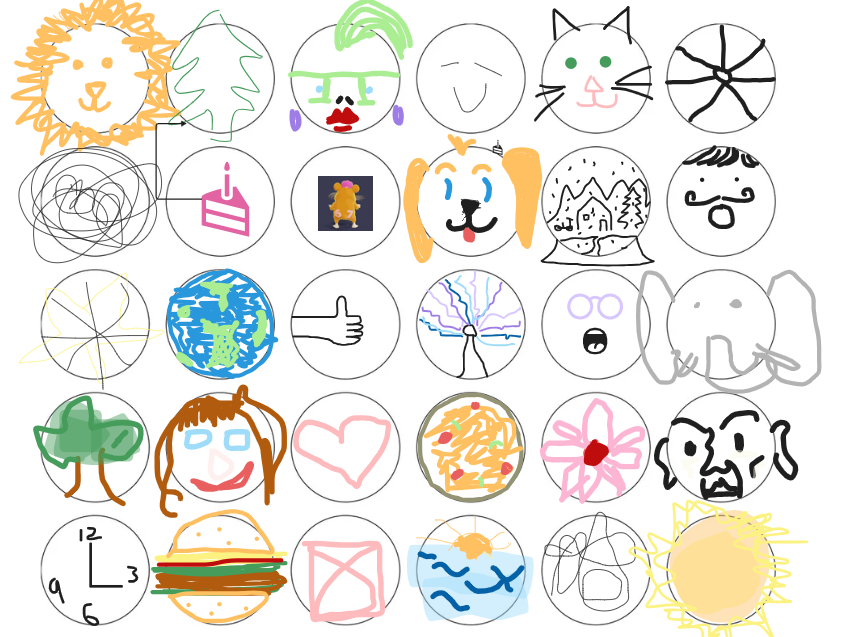
Once the ice is broken, you’re ready to introduce the challenge. Don’t assume that everyone knows everything they need to jump straight to ideas. Instead, give them some stimulus to jump off from. That might be results of your last campaign, quotes from customers or screenshots of your competitors’ offerings. A few minutes reflecting on the insights up front will help you come up with much stronger ideas.
Lesson two: quantity before quality in idea generation
To get one really good idea, you need lots of ideas. If you come up with lots of possibilities, the good ones will eventually emerge. But if you stop at two or three ideas, chances are they won’t be very good.
This is often referred to as the even-odds rule, based on the work of psychologist Dean Simonton. He found that the number of successful ideas from a creator is proportional to the overall quantity of ideas they generate.
It’s not that creative geniuses are generating amazing brainwaves every time – creative geniuses generate more ideas, and some of those pay off. The same goes for group ideation. The more ideas you generate as a group, the more likely it is that you will generate good ones.
Lesson three: early critique kills ideas
Last week, we discussed how to structure meetings around how people think. The most important takeaway is that coming up with ideas needs to be separate from critiquing them.
Divergent thinking like generating ideas requires a different frame of mind from analysing or prioritising between them. There’s no quicker route to shutting down new ideas than starting to criticise the ideas you already have.
In order to get a large volume of ideas, you need to hold off from critiquing immediately. There is still space for that! But it should be a separate stage. I’ll give an example of how to structure this in the agenda below.
Lesson four: generate ideas individually, build collectively
The unexpected corollary to lessons two and three is that people generate ideas best individually. Even if you are all in the same room together, getting people to list out ideas by themselves before sharing reduces the fear of criticism, so they are able to think more freely. Ten people writing simultaneously will also list way more ideas than they could if they were discussing ideas one by one. All this means you generate a much greater volume of ideas if you do it individually.
You might be wondering why people should come together to brainstorm if they generate ideas more effectively alone. There’s two reasons. Firstly, very few people will actually spend the time and effort coming up with new ideas if left to themselves. Coming up with new ideas is hard! It’s not surprising that we procrastinate over it, or get distracted by more important things. Having a time limited period where the whole group is expected to do it forces everybody to push past their initial thoughts and dig deeper for more creative options.
Secondly, there is still value in the group’s input. Seeing others’ ideas can spark new thoughts for you. The best ideas are often combinations of previous ones. And one you’ve got some initial ideas, spending time together building on them will reveal new insights.
Studies back this up. The most effective brainstorming process is one that involves both individual and group ideation. I find it’s most effective if you spend time individually coming up with initial ideas and then prioritise and build as a group.
Feeling a bit of pressure in the individual stage is no bad thing. The Crazy 8s activity in the agenda below is a good way to create some healthy creative pressure.
Lesson five: prioritise to turn ideas into action
The worst brainstorms generate lots of so-so ideas that go nowhere. That’s partly about the quality of the ideas, but it’s also because it’s unclear what you should focus on. If you prioritise three or four ideas, you might take those forward. If you’ve left twenty or more ideas floating around, nothing will happen.
Prioritisation works best if you do it in the session, using the collective knowledge of everyone involved. The most straightforward way to do this is to give everyone a small handful of votes to choose between all the ideas you’ve generated. There’s several more advanced collective decision making techniques in my guide Making Better Decisions with Agile.
Simple ideation agenda
Let’s pull all these lessons into one agenda. I’ve assumed you only have an hour, and you have 6-10 participants who already know each other. This is what I would do:
- Check in (5 minutes). Introduce the 30 circles challenge by asking people to turn as many as possible of your grid of 30 circles into pictures in three minutes.
- Stimulus (10 minutes). Give people four minutes to read over the stimulus in silence (yes, silence!) before opening the floor for any reflections in group discussion.
- Crazy 8s (15 minutes). Each participant should have a grid with eight boxes. Give them a minute for each box to add an idea before picking their favourite idea and spending five minutes fleshing it out.
- Prioritising (10 minutes). Each person in turn should explain their top idea briefly in turn. Then give everyone three votes to pick their favourites. Usually two or three ideas will come out top from this.
- Building out (15 minutes). Split into two or three breakouts for ten minutes, each looking at a different one of the top ideas. Give the breakouts a couple of prompt questions to answer, like ‘how could we take this idea further?’, ‘what would we need to implement this?’. Allow five minutes for the breakouts to report back in the main group.
- Check out (5 minutes). Summarise next steps. Depending on the question you are exploring, you might be able to implement several solutions or just one. If it’s the latter, do another round of voting to choose which of the ideas from your breakouts you will settle on.
Learn more about good facilitation
This is part of a series on how to facilitate good meetings. We’ve already covered why this is an agile skill and what you need to know to be an unusually good facilitator. Next week, we’ll explore how to grow your skills and get better at facilitation. Subscribe to my email newsletter to get a monthly roundup of all the posts.
Leave a Reply